
Oui! Chef Season 5 Episode 1
Ceviche in Panama: Where Acid, Heat, and the Sea Collide
There are dishes you follow to the letter — and then there are dishes you listen to.
Ceviche is the second kind.
In Panama, ceviche isn’t precious. It’s alive. It’s eaten standing up, served ice-cold in plastic cups, splashed with lime until it bites back. You’ll find it at roadside stands, beach shacks, fish markets, and family tables — always fresh, always assertive, and never apologizing for its acidity.
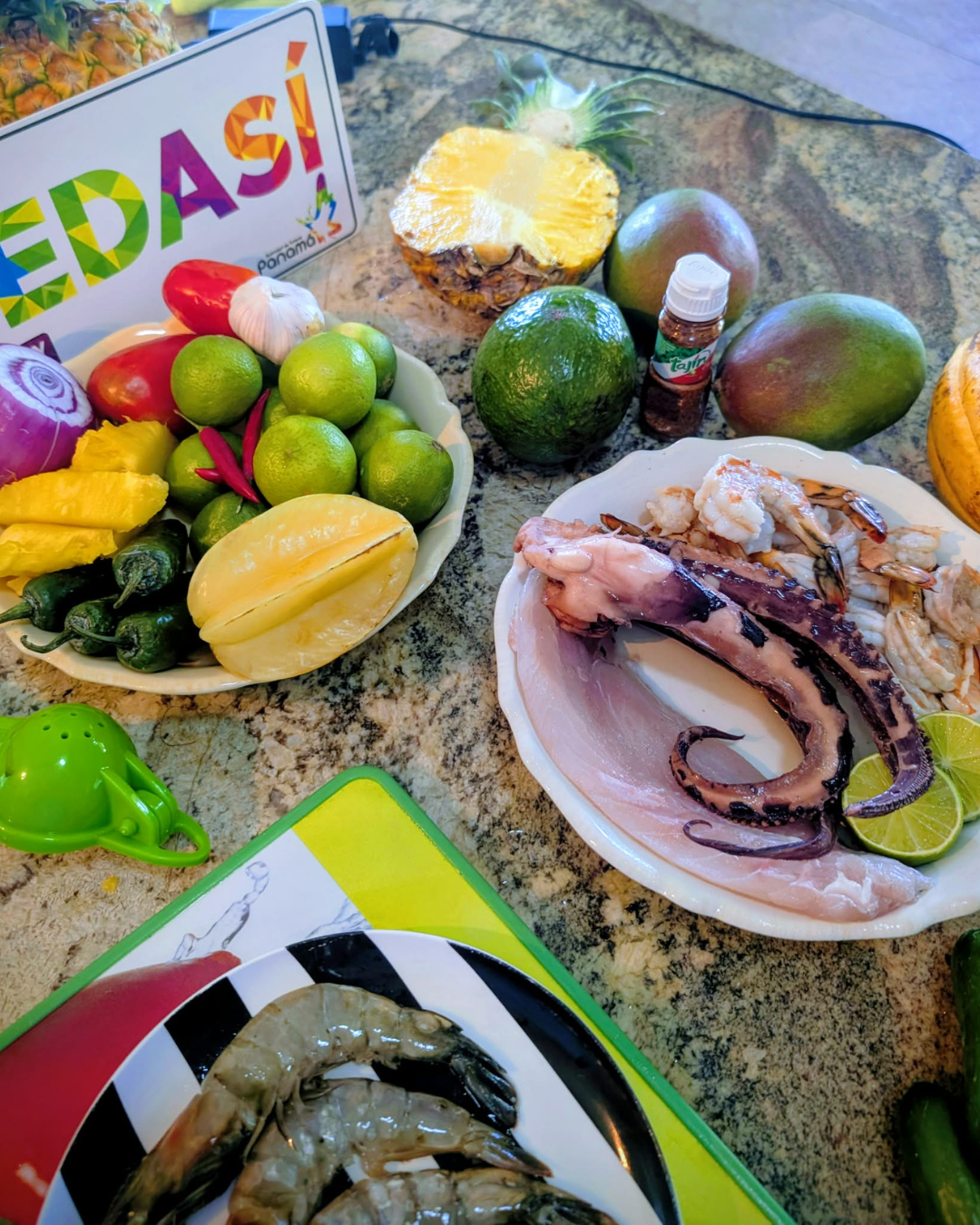
At its core, ceviche is about balance: citrus versus protein, heat versus sweetness, texture versus restraint. Get it right and the dish hums. Get it wrong and it’s either flat or aggressive — no middle ground.
Panamanian ceviche traditionally leans clean and honest. Corvina (sea bass) is king, lime juice does the heavy lifting, and onions and chiles bring sharpness and heat. It’s not overloaded. It’s not overthought. The seafood leads, everything else follows.
But Panama is also a crossroads — Caribbean, Indigenous, Afro-Antillean, Latin American — and that layered identity shows up in the food. Tropical fruit finds its way into savory dishes. Heat is embraced, not feared. Acid is used boldly. When done with intention, these elements don’t distract; they deepen the story.
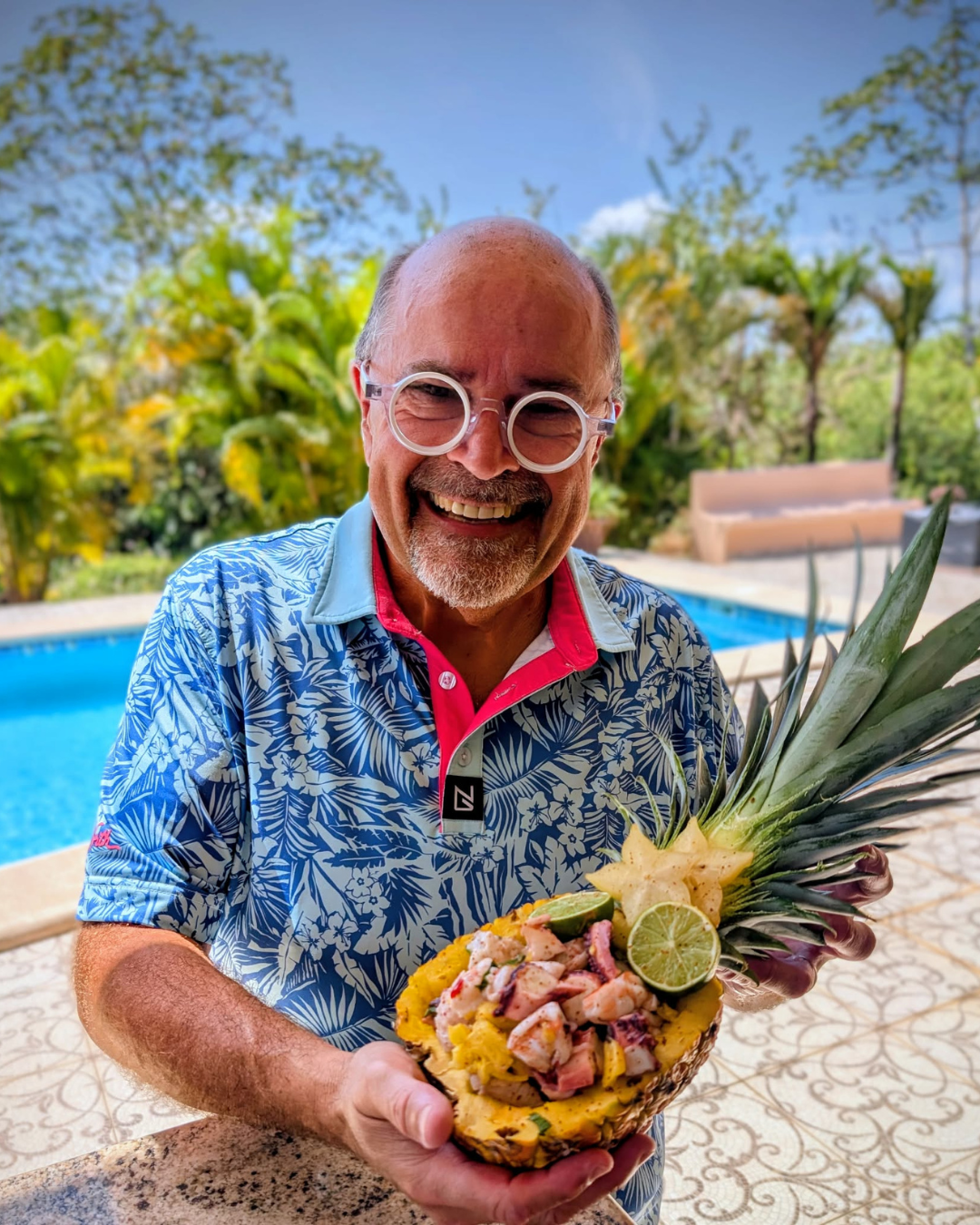
That’s where this ceviche lives.
This version respects the soul of Panamanian ceviche while pushing it forward through technique and texture. Tender octopus, delicately cooked. Shrimp treated with care, not bravado. Fresh fish handled minimally and respectfully. Everything diced fine so each bite delivers contrast without chaos.
There’s sweetness — but it’s controlled. Heat — but it’s clean. Citrus — lots of it — because ceviche should wake you up, not lull you into comfort.
And then there’s the presentation.
Serving ceviche in a hollowed pineapple isn’t about gimmicks. It’s about context. You’re eating something raw, bright, and coastal — inside something tropical, aromatic, and unmistakably of the place you’re standing in. It reinforces the experience before the first bite ever hits your tongue.
This is the kind of dish that teaches without lecturing. It shows students — and cooks — that ceviche isn’t just “raw seafood with lime.” It’s discipline. It’s restraint. It’s knowing when to stop.
Print
Panamanian-Style Mixed Seafood Ceviche
- Yield: Serves 6–8 as an appetizer 1x
Ingredients
Seafood
-
1 lb octopus, cleaned
-
1/2 lb raw shrimp, peeled and deveined
-
1/2 lb very fresh sea bass (corvina if available), diced small
Vegetables & Fruit (all diced very fine)
-
1/2 English cucumber, seeds removed
-
1 small tomato
-
2 green onions
-
1/4 red onion
-
1/2 cup fresh pineapple (plus 1 whole pineapple for serving bowl, optional)
Flavor
-
1-2 fresh chili peppers (ají chombo, serrano, or similar), finely minced
-
Juice of 10-12 fresh limes (enough to fully coat seafood)
-
Tajín seasoning, to taste
-
Salt, if needed (go easy — Tajín already brings salt)
Instructions
1. Cook the Octopus
Bring a pot of water to a gentle simmer (no hard boil — that’s how octopus turns into a rubber band).
-
Add the octopus and simmer gently until tender, about 45–60 minutes
-
Remove and let cool completely
-
Dice very small and reserve
2. Poach the Shrimp
Using the same water
-
Add shrimp and poach just until pink and opaque, 1–2 minutes max
-
Shock in cold water, drain well
-
Dice small
3. Prep the Fish
-
Dice the sea bass small and keep chilled until mixing
Freshness matters here. If the fish isn’t pristine, don’t serve ceviche. Period.
Assembly
-
In a chilled bowl, combine:
-
Octopus
-
Shrimp
-
Sea bass
-
-
Add all diced vegetables, pineapple, and chili.
-
Pour in fresh lime juice until everything is just submerged.
-
Season with Tajín and a light pinch of salt if needed.
-
Gently fold and let marinate 10–15 minutes — just long enough for the fish to turn opaque while staying silky.
To Serve
-
Hollow out half a pineapple to create a serving bowl
-
Spoon ceviche into the pineapple shell
-
Finish with an extra squeeze of lime and a light dusting of Tajín
Serve cold. No garnish needed — this dish already knows who it is.
Notes
- The fine dice is key. This isn’t chunky ceviche — it’s refined, spoonable, and balanced.
- Pineapple works because you kept it restrained. Too much and you’d kill the acidity balance.
- Poaching the octopus and shrimp respects texture while keeping the dish clean
- Tajín bridges Mexico and Central America beautifully here without hijacking the dish.
- Category: appetizers, seafood, oui chef, recipes





Leave A Comment